Best Habit Tracker Apps in 2026: 10 Apps Tested and Ranked
We tested 25+ habit tracker apps to find the ones that actually help build lasting habits. Here are the 10 best habit trackers for iPhone and Android in 2026.

Building a habit takes longer than you think. The famous "21 days" rule is a myth. Research from University College London found that habits take an average of 66 days to form — and anywhere from 18 to 254 days depending on the person and behavior [1]. A 2024 meta-analysis confirmed this, finding that most health habits require 2 to 5 months to become automatic [2].
That's a long time to rely on willpower alone. A good habit tracker can make the difference between a habit that sticks and one that fades after two weeks.
We tested over 25 habit tracking apps to find the ones that actually work. Here's what stood out.
Disclosure: Keel is our app. We build it, and it ranks #1 on this list. We still tested every competitor hands-on and kept the pros and cons honest; where another app fits you better, we say so below.
What Makes a Habit Tracker Effective?
Research points to a few factors that help habits form [3]:
- Contextual cues: Habits form faster when tied to specific times, places, or existing behaviors
- Visible progress: Seeing your consistency builds motivation and identity ("I'm someone who exercises")
- Flexibility for misses: Missing one day doesn't ruin habit formation, but harsh penalties can trigger abandonment
- Simplicity: The easier it is to log, the more likely you'll keep doing it
The best habit trackers support these principles. The worst ones turn habit-building into another source of stress.
On a budget? See our 7 Best Free Habit Tracker Apps for options that don't require a subscription.
The Best Habit Tracker Apps in 2026
At a Glance
| App | Price | Platforms | Best for |
|---|---|---|---|
| Keel | Free (Premium available) | iOS, Web | Streak-free tracking via bounce-back rate |
| Streaks | $5.99 one-time (iOS), $4.99 (Mac) | iOS, Mac, Apple Watch | Apple users who like "don't break the chain" |
| Habitica | Free (Premium $4.99/mo) | iOS, Android, Web | Gamification and social accountability |
| Habitify | Free (3 habits) / Premium from $3.33/mo | iOS, Android, Mac, Apple Watch, Web | Multi-device sync |
| TickTick | Free (5 habits) / Premium $3.99/mo | iOS, Android, Mac, Windows, Linux, Web | Habits + tasks in one system |
| Loop Habit Tracker | Free (open source) | Android | Free, private tracking on Android |
| Productive | Free (5 habits) / Premium from $6.99/mo | iOS, Android | Time-of-day patterns and smart reminders |
| Way of Life | Free (3 habits) / Premium $4.99/mo | iOS, Android | Tracking good and bad habits together |
| Finch | Free / Premium ~$15/year | iOS, Android | Gentle, judgment-free self-care |
| Notion | Free / $10/mo for teams | iOS, Android, Mac, Windows, Web | Building your own custom system |
1. Keel
Platforms: iOS, Web | Price: Free (Premium available)
Keel is our own app (see the disclosure above), so judge this entry with that in mind. It takes a different approach to habit tracking: instead of counting streaks, it measures your bounce-back rate: how quickly you return to a habit after missing a day.
This matters because streaks create a psychological trap. Research on the "abstinence violation effect" shows that breaking a self-imposed rule (like a streak) triggers guilt and shame that leads to abandoning the behavior entirely [4]. Keel sidesteps this by treating missed days as neutral data points, not failures.
What makes it stand out:
- Bounce-back rate as the primary metric: tracks resilience, not perfection
- Goal linking: connect habits to meaningful outcomes to see which habits drive real progress
- AI Habit Coach: get personalized planning and troubleshooting when habits aren't sticking
- Daily planner integration: habits and tasks in one view, scheduled by time of day
- No habit limits on the free plan
Best for: People who've tried streak-based apps and found them stressful. If you want sustainable habits without the guilt of "breaking a streak," Keel is built for that philosophy.
What's missing: No Android app yet (web works on any device). No gamification elements.
2. Streaks
Platforms: iOS, Mac, Apple Watch | Price: $5.99 one-time
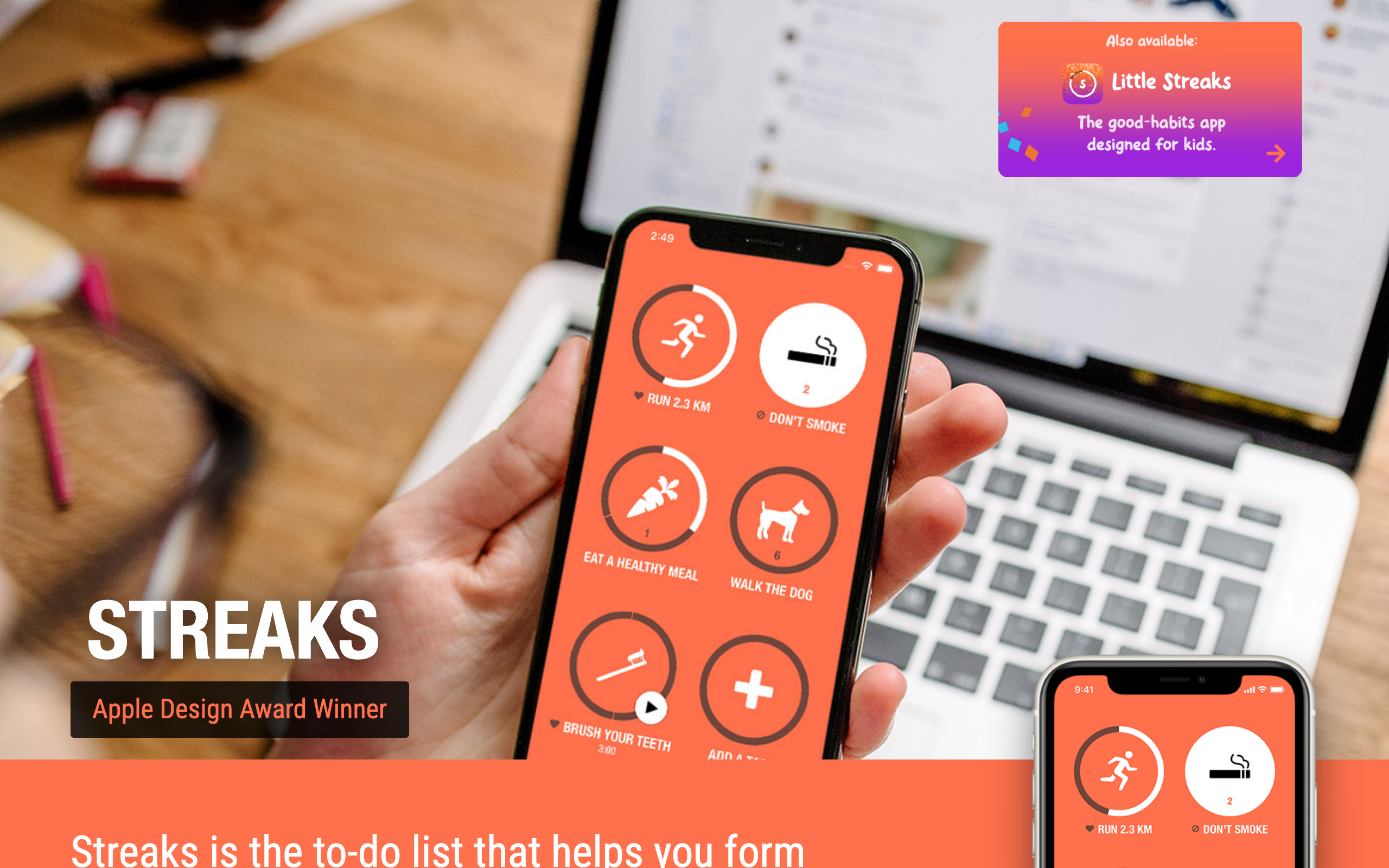
Streaks is the gold standard for simple, streak-based tracking on Apple devices. The app won an Apple Design Award and has maintained a 4.8 rating from over 27,000 reviews across nearly a decade.
The intentional 24-habit limit forces you to prioritize what actually matters. Deep Apple Health integration means fitness habits can complete automatically based on your activity data.
What makes it stand out:
- Clean, minimal interface with 78 color themes and 600+ icons
- Automatic tracking via Apple Health (steps, workouts, sleep)
- Powerful Shortcuts automation support
- One-time purchase, no subscription
Best for: iPhone users who want a beautiful, focused tracker and respond well to "don't break the chain" motivation.
What's missing: Apple-only (no Android or web). Limited analytics beyond streaks. The streak model can be demotivating for some personality types.
Price: $5.99 (iOS), $4.99 (Mac)
3. Habitica
Platforms: iOS, Android, Web | Price: Free (Premium $4.99/mo)
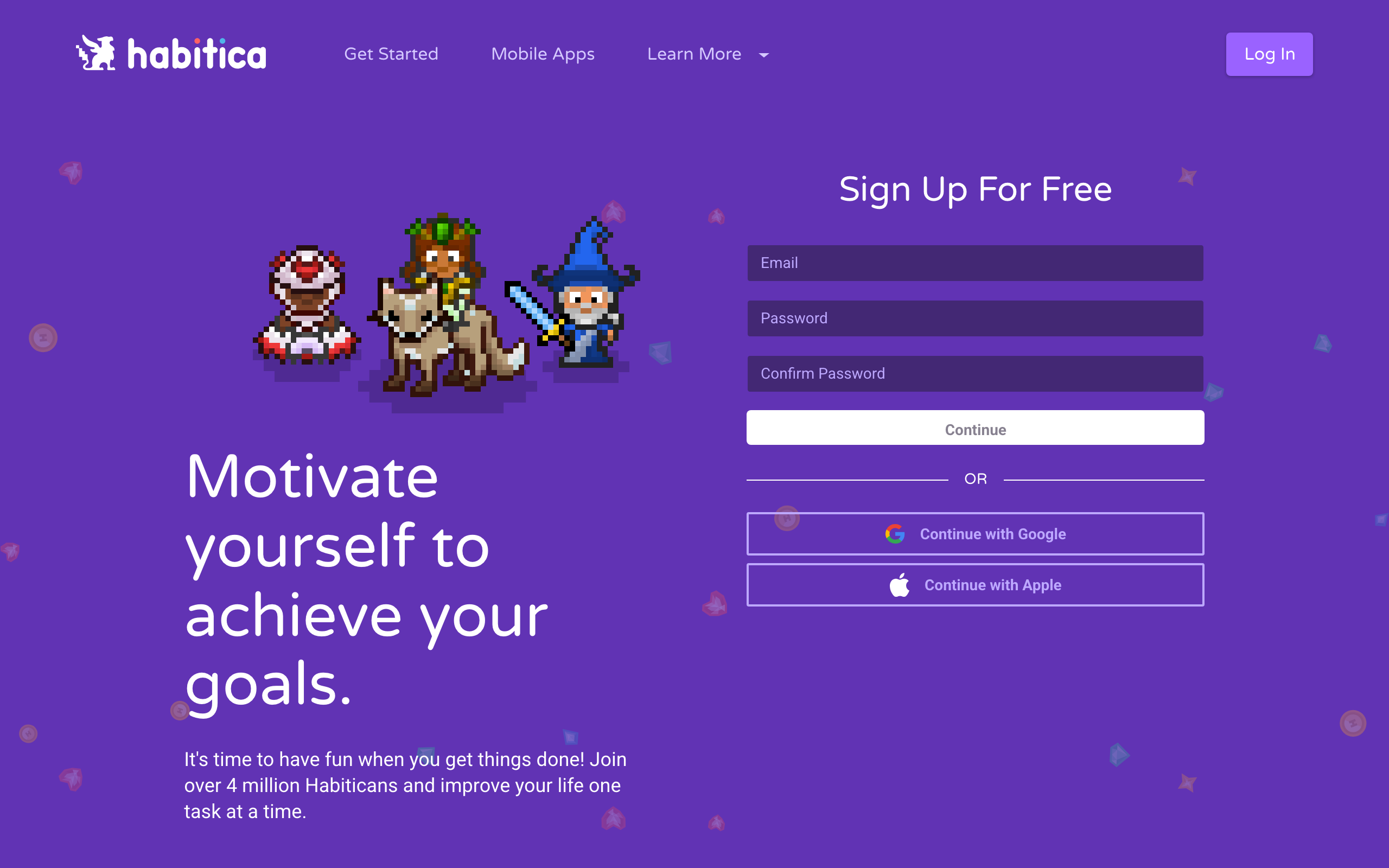
Habitica transforms your habits into a role-playing game. Complete habits to earn gold and experience points. Miss them and your character takes damage. It's not subtle, but for people who respond to gamification, it works.
With 15 million downloads and active content updates (new quests, pets, and equipment through 2025-2026), Habitica has a thriving community. The social features add accountability through guilds and party quests.
What makes it stand out:
- Full RPG system with character customization, quests, and party battles
- Social accountability through guilds and challenges
- Supports habits, dailies, and to-dos
- Free tier includes every core feature (subscription is purely cosmetic)
Best for: People who grew up playing RPGs and want external motivation systems. Also great if you thrive with community accountability.
What's missing: Steep learning curve (classes, equipment, quests, pets; it's overwhelming at first). The pixel art aesthetic feels dated to some users. iOS app can be sluggish compared to web version.
4. Habitify
Platforms: iOS, Android, Mac, Apple Watch, Web | Price: Free (3 habits) / Premium from $3.33/mo
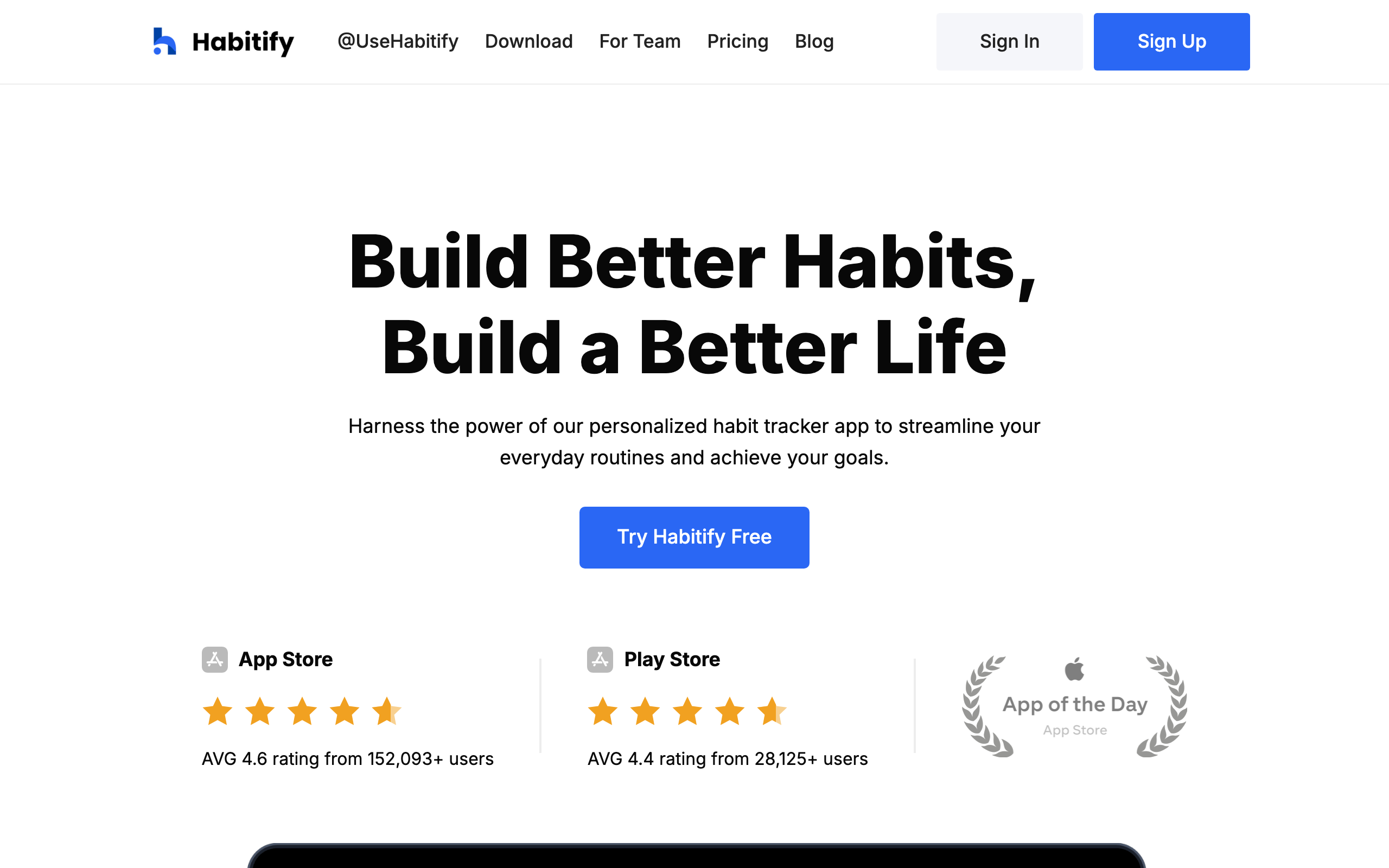
Habitify offers the best cross-platform experience available. Track habits on your iPhone, review progress on your Mac at work, check in via web app at home. Everything stays in sync.
The app organizes habits by time of day (morning, afternoon, evening) and supports three tracking types: yes/no, timed, and quantity. Analytics are solid, showing completion rates, streaks, and patterns over time.
What makes it stand out:
- True cross-platform sync across iOS, Android, Mac, Apple Watch, and web
- Habit stacking reminders: auto-cues the next habit when one is completed
- Location-based reminders (trigger habits when arriving at gym, office, etc.)
- Detailed analytics and progress reports
Best for: Anyone who uses multiple devices throughout the day and wants seamless sync.
What's missing: Only 3 habits on free tier (quite restrictive). iOS widget issues are a common complaint. Brand searches have surged 878% year-over-year, but this popularity has also surfaced user frustrations with the free plan limits.
Price: Free (3 habits), Premium $7.49/month or $89.99 lifetime
5. TickTick
Platforms: iOS, Android, Mac, Windows, Linux, Web | Price: Free (5 habits) / Premium ~$3/mo
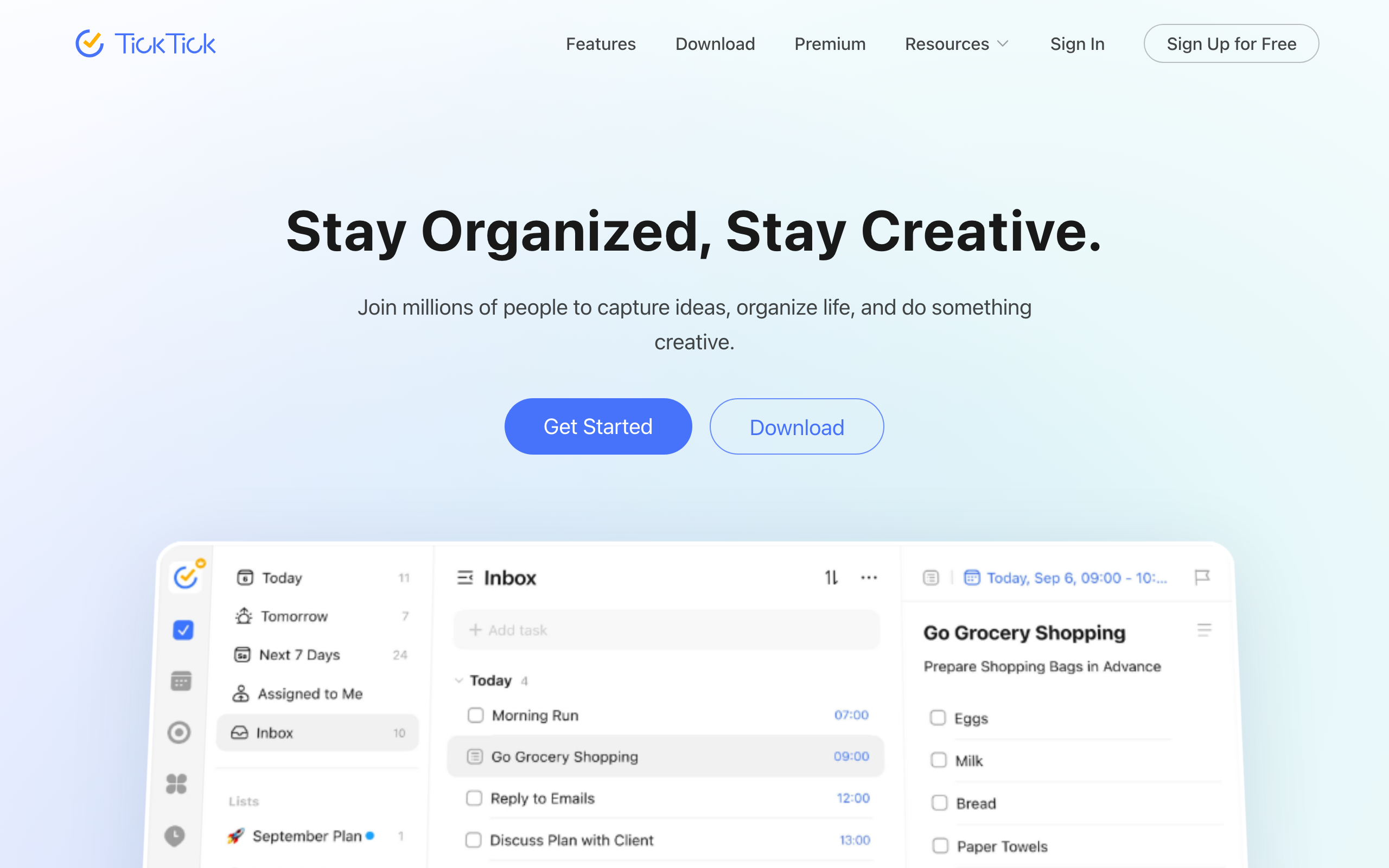
TickTick treats habits as part of a comprehensive productivity system rather than a standalone focus. It bundles habit tracking with task management, Pomodoro timers, calendar views, and the Eisenhower Matrix.
The habit gallery offers over 60 pre-built templates across categories like health, fitness, and productivity, with flexible frequency settings. This is useful if streaks aren't your thing. You can set "3 times per week" instead of daily.
What makes it stand out:
- All-in-one productivity (tasks, habits, calendar, focus timer)
- Flexible habit frequency (not just daily)
- Cross-platform with excellent sync
- Built-in Pomodoro timer
Best for: People who want tasks and habits in one system. Great for those who already use TickTick for task management.
What's missing: Calendar view is paywalled. Free habit count is limited to 5. The breadth of features can feel overwhelming.
Price: Free (limits), Premium $3.99/month or $35.99/year
6. Loop Habit Tracker
Platforms: Android | Price: Free (open source)
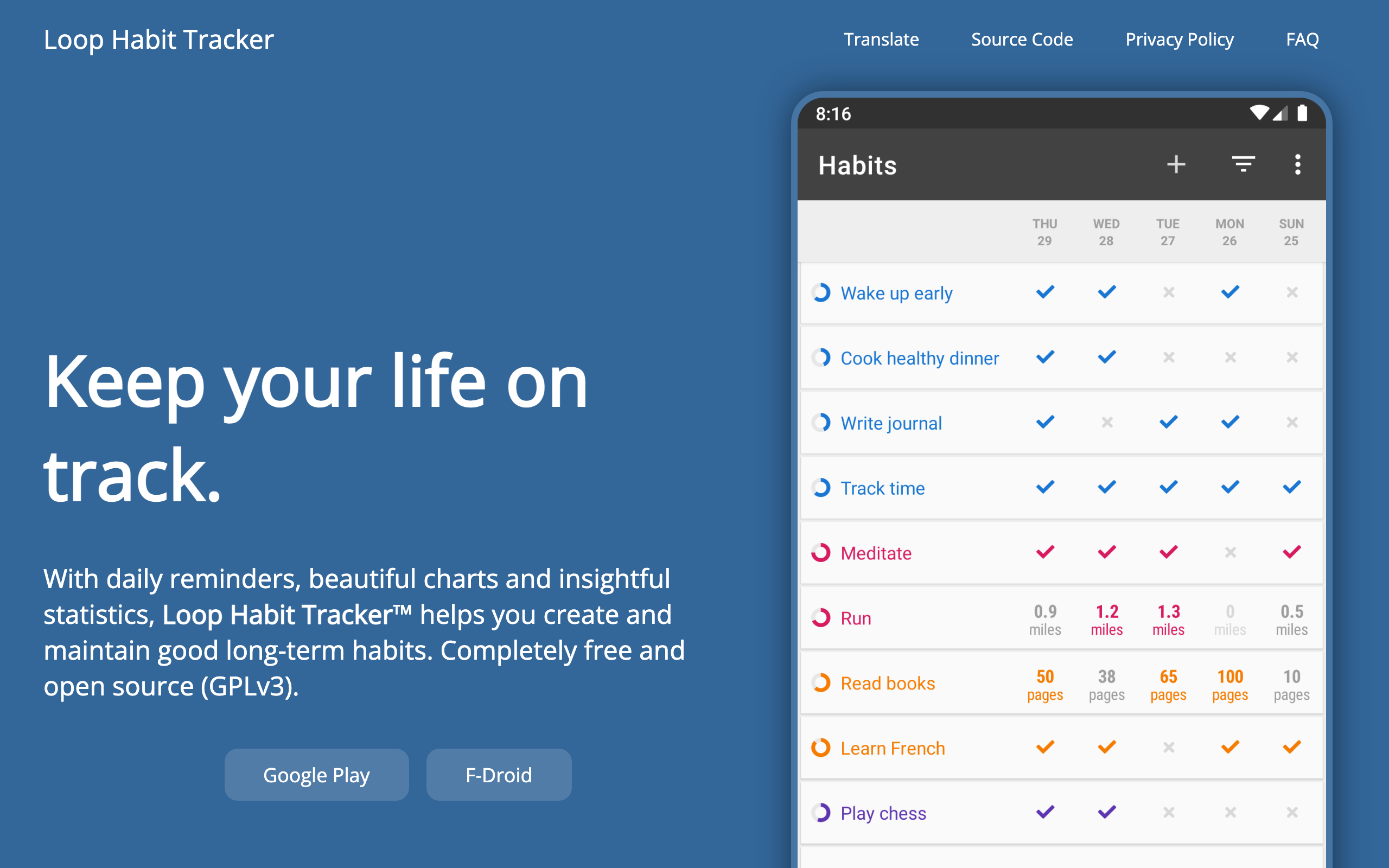
Loop is the best completely free option for Android users. It's open source with no ads, no subscriptions, no account required, and no data collection. Everything stays on your device.
Despite being free, Loop includes detailed statistics and charts that many paid apps lack. The app calculates a "strength" score for each habit based on your consistency over time.
What makes it stand out:
- 100% free with no limits
- No internet connection required; fully offline
- Beautiful graphs showing success rates over different time periods
- Export all your data whenever you want
- Clean Material Design interface
Best for: Android users who want privacy-focused, no-nonsense tracking with solid analytics. Also great for anyone who refuses to deal with habit limits or subscriptions.
What's missing: Android only (no iOS, web, or sync). Interface feels utilitarian compared to polished competitors.
7. Productive
Platforms: iOS, Android | Price: Free (5 habits) / Premium from $6.99/mo
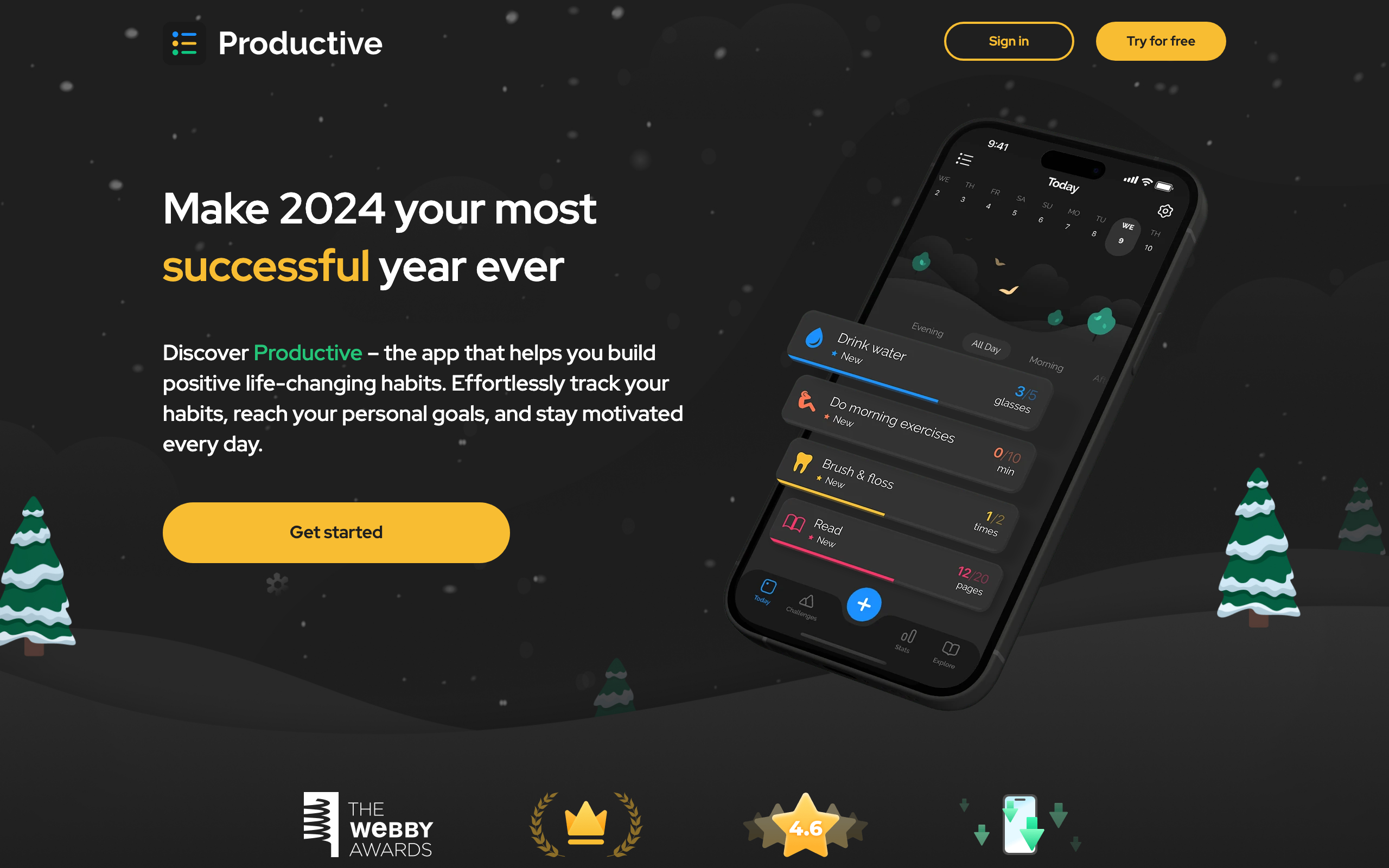
Productive shines with intelligent time-of-day organization. It shows completion rates for morning, afternoon, and evening separately, so you can see which parts of your day are strong and where you consistently fall off.
The app asks you to fill out a short survey on first launch, then suggests habits from a preset list. You can create custom habits on the free plan by picking a preset and renaming it.
What makes it stand out:
- Time-based tracking with separate stats by time of day
- Smart reminders that adapt to when you actually complete tasks
- Habit templates across categories
- Built-in timers for timed habits
Best for: People with complex schedules who need smart reminders and want to understand their daily patterns.
What's missing: 5-habit limit on free is restrictive. Premium is on the expensive side ($10/month). Adding custom habits without upgrading requires a workaround.
8. Way of Life
Platforms: iOS, Android | Price: Free (3 habits) / Premium $4.99/mo
Way of Life stands out by tracking both good and bad behaviors. You can mark days as positive, negative, or skip, and skipping doesn't break your streak, which makes it forgiving for realistic habit building.
The note-taking feature lets you journal why you succeeded or failed on any given day, which adds context to your data over time.
What makes it stand out:
- Three-option tracking (done, not done, skip)
- Track both positive habits and behaviors you want to reduce
- Notes feature adds context to your data
- Excellent trend visualization (charts, bar graphs, trend lines)
Best for: People trying to break bad habits alongside building good ones. Great for anyone who wants to understand the why behind their behavior patterns.
What's missing: Some users report data backup issues. Interface is functional but not as polished as competitors.
9. Finch
Platforms: iOS, Android | Price: Free / Premium ~$15/year
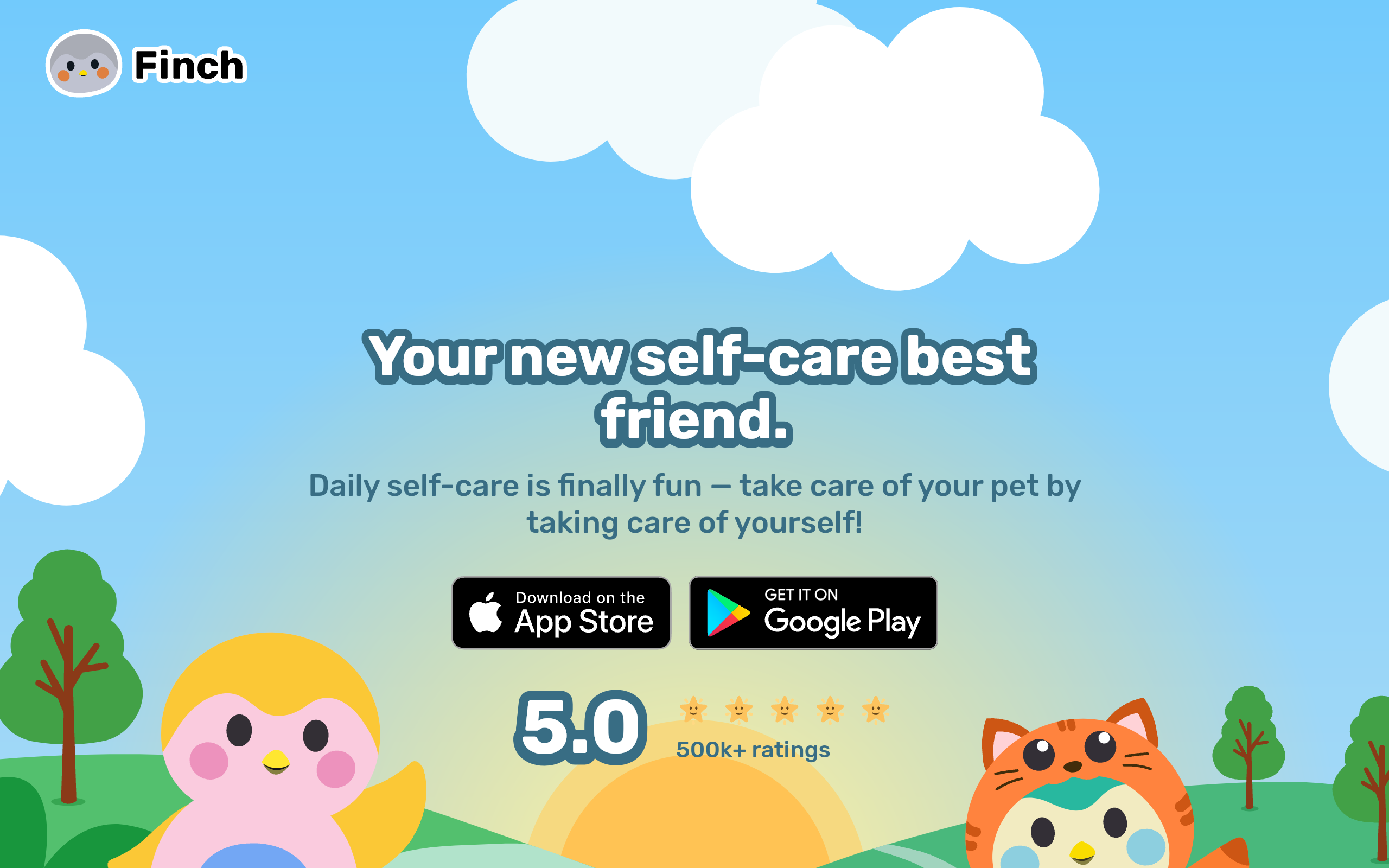
Finch is a habit tracker disguised as a pet care app. You raise a virtual bird that grows and goes on adventures as you complete self-care habits. It sounds gimmicky, but with 10 million+ downloads and a 4.9 rating, it clearly resonates.
The key difference is that Finch is non-judgmental. There are no penalties for skipping habits, no streak anxiety, no gamified punishment. It's the polar opposite of apps that weaponize fear of loss.
What makes it stand out:
- Virtual pet creates intrinsic motivation (you're doing it for your bird)
- No penalties or streak anxiety
- Mental health focus with mood check-ins, journaling, and breathing exercises
- Generous free tier
Best for: People who need gentle motivation rather than pressure. Great for those dealing with anxiety or depression who want self-care tracking without judgment.
What's missing: Limited habit customization. Not ideal for serious productivity-focused tracking. The cute aesthetic isn't for everyone.
10. Notion
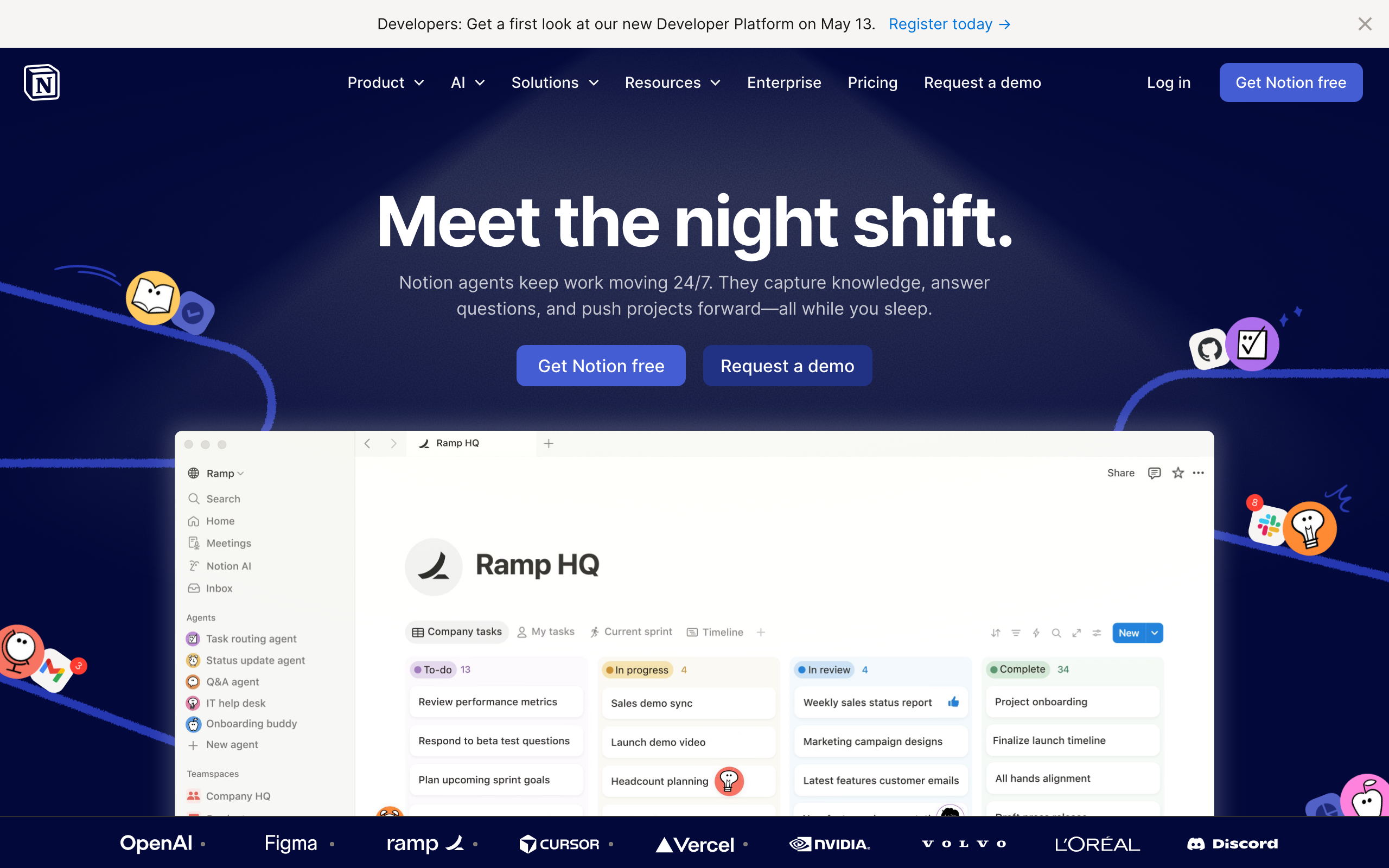
Platforms: iOS, Android, Mac, Windows, Web | Price: Free / $10/mo for teams
Notion is a workspace rather than a dedicated habit tracker: you build your own. For people who enjoy designing their own systems, it offers unmatched flexibility through databases, relations, roll-ups, and formulas.
The ecosystem of free templates means you can find a habit tracking system that fits your exact needs, or build one from scratch.
What makes it stand out:
- Complete customization (build exactly what you need)
- Habits, learning, projects, and notes in one workspace
- Large ecosystem of free templates
- Works across all devices
Best for: Power users who enjoy building systems and want total control. People who already use Notion for other things.
What's missing: Setup is a project in itself. The mobile app is sluggish. Quick daily check-ins feel slow compared to dedicated apps. Not ideal if you just want to open an app, check off habits, and move on.
How We Evaluated These Apps
We tested each app for at least two weeks, tracking real habits and noting:
- Daily friction: how easy is it to log a habit at 6 AM when you're half awake?
- Motivation mechanics: does the app give you a reason to come back tomorrow?
- Flexibility: can it handle "meditate daily" and "gym 3x per week" equally well?
- Analytics: can you see trends, completion rates, and patterns over time?
- Price-to-value: is the free tier usable? Is the paid tier worth it?
- Real user sentiment: what do people on Reddit and the App Store say after months of use?
Which Habit Tracker Should You Choose?
If you've tried streaks and found them stressful: Keel. The bounce-back philosophy is specifically designed for people who get demotivated by broken streaks.
If you're all-in on Apple: Streaks. Beautiful design, automatic Health integration, one-time purchase.
If you need gamification to stay motivated: Habitica. The RPG mechanics create real accountability.
If you use multiple devices: Habitify. True cross-platform sync across everything.
If you want habits + tasks in one app: TickTick. All-in-one productivity system.
If you're on Android and want free: Loop Habit Tracker. Open source, no limits, no catch.
If you need gentle, non-judgmental tracking: Finch. Self-care focused with zero pressure.
If you want to build your own system: Notion. Complete flexibility for power users.
The Real Key to Habit Success
The best habit tracker is the one you'll actually use. But beyond that, research points to a few principles that matter more than which app you choose [5]:
-
Start small. Habits that take under 2 minutes to perform automate faster than complex routines.
-
Stack on existing habits. Attaching new behaviors to existing ones (like "after I pour my coffee, I'll write one sentence in my journal") creates reliable triggers.
-
Expect 2-5 months. Habits don't form in 21 days. Set realistic expectations and you'll be less likely to give up during the learning phase.
-
Missing one day doesn't matter. Research shows that missing a single opportunity to perform a habit does not materially affect the formation process [1]. What matters is getting back on track quickly, which is exactly what bounce-back rate measures.
-
Make the behavior enjoyable. Habits reinforced by intrinsic satisfaction form faster and last longer than habits maintained through external pressure.
Pick an app, but remember the app is just a tool. The real work is showing up consistently, forgiving yourself when you miss, and getting back on track the next day.
References
[1] Lally, P., van Jaarsveld, C. H., Potts, H. W., & Wardle, J. (2010). How are habits formed: Modelling habit formation in the real world. European Journal of Social Psychology, 40(6), 998-1009.
[2] Time to Form a Habit: A Systematic Review and Meta-Analysis of Health Behaviour Habit Formation and Its Determinants. (2024). PMC.
[3] Gardner, B., Lally, P., & Wardle, J. (2012). Making health habitual: the psychology of 'habit-formation' and general practice. British Journal of General Practice, 62(605), 664-666.
[4] Marlatt, G. A., & Gordon, J. R. (1985). Relapse prevention: Maintenance strategies in the treatment of addictive behaviors. Guilford Press.
[5] van der Weiden, A., et al. (2020). How to Form Good Habits? A Longitudinal Field Study on the Role of Self-Control in Habit Formation. Frontiers in Psychology, 11, 560.
Frequently asked questions
- What is the best habit tracker app in 2026?
- It depends on what makes you quit. If broken streaks demotivate you, Keel measures bounce-back rate instead. If you are all-in on Apple, Streaks. If you need gamification, Habitica. If you want habits and tasks in one system, TickTick. If you are on Android and want free, Loop Habit Tracker.
- Is there a habit tracker app without streaks?
- Keel replaces the streak counter with bounce-back rate — how quickly you return to a habit after missing a day — so a miss is a neutral data point rather than a reset to zero. Finch also avoids streak pressure with gentle, self-care-focused tracking.
- Which habit tracker has the best reminders?
- Productive is the strongest on reminders, built around time-of-day patterns and smart reminder scheduling. Inside the Apple ecosystem, Streaks is the better choice thanks to Shortcuts, Siri, and an Apple Watch app that works on its own.
- Do habit tracker apps actually work?
- They help when they support what the research says drives habit formation: contextual cues tied to a time, place, or existing behavior; visible progress; flexibility when you miss a day; and low logging friction. They work against you when harsh penalties turn one missed day into a reason to abandon the habit.
- How long does it take to build a habit?
- Expect two to five months rather than 21 days. Lally et al. (2010) found that automaticity took a median of 66 days and varied widely between people and behaviors. The same study found that missing a single opportunity did not materially affect the process.